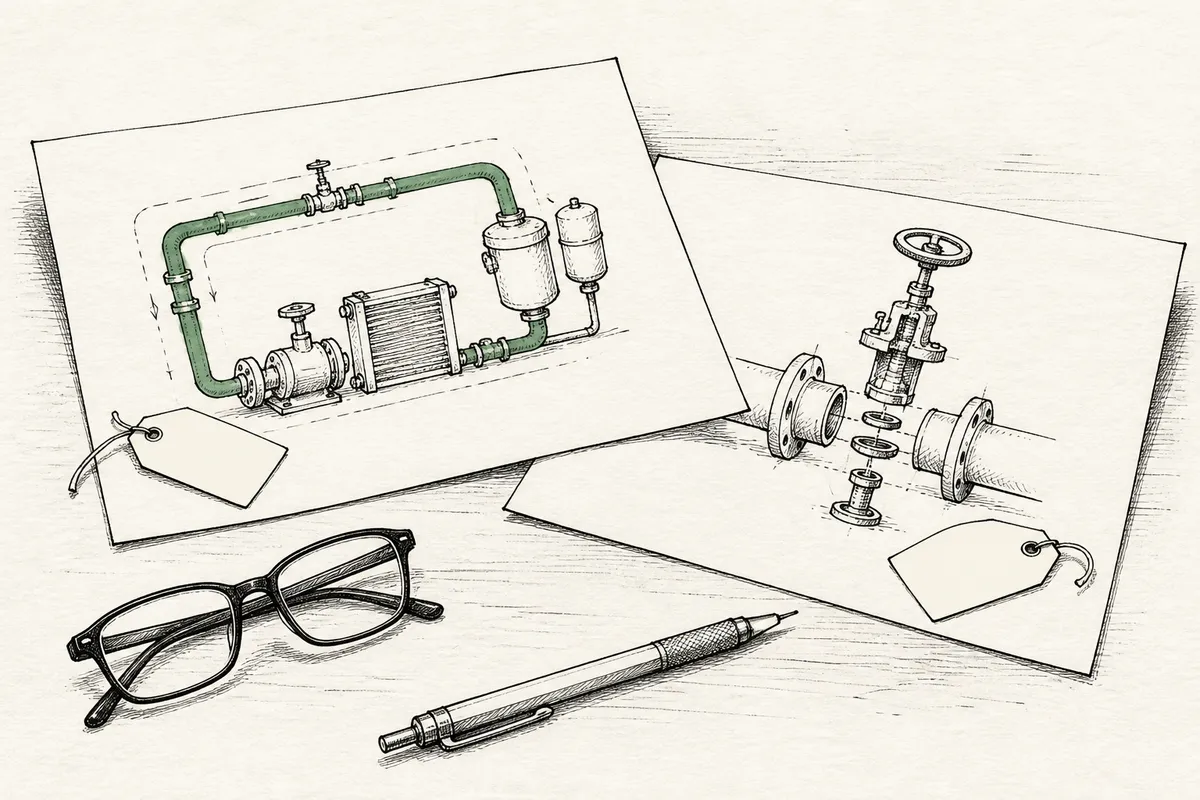
Real Fixes for AI's Water and Power Use
Some fixes get announced. Other fixes get deployed. The gap between those two categories is where most of the confusion about AI’s water and power footprint actually lives, and almost nobody sorting through vendor claims takes the time to separate what’s running in production today from what’s still a slide in a pitch deck. That’s the entire insight. Once you sort real deployments from projected roadmaps, the picture stops looking like a crisis with no answer and starts looking like an engineering problem with partial, uneven progress.
TL;DR:
Data center water power engineering fixes that are actually reducing consumption today center on liquid cooling retrofits, waste heat reuse, and grid-interactive load shifting, while fixes like small modular reactors and novel refrigerants remain years from operating at any meaningful scale. The honest version of this story isn’t optimism or alarm, it’s a split between what’s installed and running versus what’s still a projection. Knowing which category a claim falls into is worth running your own version of this math before signing anything.
Key Takeaways
- Liquid cooling and direct-to-chip systems are already reducing water draw in operating data centers, not just in lab demonstrations.
- Waste heat reuse projects exist and function today, though they depend heavily on having a nearby use for the heat.
- Grid-interactive load shifting reduces peak power strain without requiring new generation capacity or new hardware.
- Small modular reactors and next-generation refrigerants are real engineering efforts, but neither is deployed at a scale that changes today’s numbers.
- The absence of a public complaint about a facility’s water use gets mistaken for the absence of a problem, when it usually just means the disclosure hasn’t happened yet.
- Vendors mixing “in development” and “in production” language in the same pitch is the single biggest source of confusion for buyers evaluating these claims.
What Are Data Center Water Power Engineering Fixes?
Data center water power engineering fixes are the specific mechanical, electrical, and operational changes made to cooling and energy systems inside a facility to reduce the water and electricity it consumes per unit of compute. That definition matters because it excludes marketing language about sustainability goals or future carbon targets, and it excludes financial offsets like buying renewable energy credits elsewhere. It’s strictly about what changes inside the building, on the equipment, in the load management, and in the piping. Here’s the honest version: some of these fixes are bolted onto existing facilities right now, and some exist only in pilot programs that won’t touch the broader industry’s numbers for years.
Why Does This Distinction Matter for Buyers?
This distinction matters because vendors routinely present research-stage technology alongside deployed technology without flagging the difference, which lets a buyer believe a facility is more efficient than it actually is. A cooling system that exists in one demonstration site gets described the same way as a cooling retrofit running across a hundred facilities, and the language doesn’t change even though the maturity level is completely different. That’s uncomfortable at first. Once you start asking “is this running or is this planned,” the sales conversation changes shape entirely.
Fixes Working Today
Liquid cooling, in its direct-to-chip and immersion forms, is the clearest example of a fix that’s already reducing both water and power draw in operating facilities. Direct-to-chip cooling circulates coolant through a cold plate mounted directly on the processor, removing heat far more efficiently than blowing air across a server rack, which means less energy spent moving air and often less water spent on evaporative cooling towers downstream. Immersion cooling submerges entire servers in a dielectric fluid, eliminating fans almost entirely and cutting the facility’s reliance on chilled water loops. Neither approach is experimental anymore. Both are running in production environments right now, not as a future promise but as current operational reality.
Waste heat reuse is the second fix that’s functioning today, though it comes with a real limitation. A data center generates enormous amounts of low-grade heat, and some facilities now pipe that heat into nearby district heating systems, greenhouses, or industrial processes instead of dumping it into the atmosphere or a cooling tower. That’s the trap, though. The fix only works where there’s a willing recipient for the heat nearby, which means it solves the problem for specific facilities in specific locations and does nothing for a data center sitting in the middle of nowhere with no district heating grid to plug into.
Grid-interactive load shifting is the third fix worth naming directly, and it doesn’t touch cooling at all. It works by shifting compute-heavy workloads to hours when grid demand is lower, or throttling non-urgent processing during peak strain windows, which reduces the pressure a facility puts on the surrounding power grid without adding a single piece of new hardware. This is software and scheduling discipline, not concrete and steel. It’s also one of the cheapest fixes on this list to implement, because it’s mostly a policy and coordination change rather than a capital project.
A cooling system that exists in one demonstration site gets described the same way as a cooling retrofit running across a hundred facilities, and the language doesn’t change even though the maturity level is completely different.
Fixes Still Years From Scale
Small modular reactors get discussed constantly as the long-term answer to data center power demand, and the engineering behind them is real, but none of them are supplying meaningful power to commercial data center operations today. They’re licensed, permitted, and built on timelines measured in years, not quarters, and every current announcement about a facility “powered by” one of these reactors is describing a plan, not a running system. That’s the honest version most sales conversations skip.
Novel low-global-warming-potential refrigerants are undergoing the same kind of staged rollout. They’re real, they’re being tested, and they will eventually replace some of the higher-impact refrigerants used in current cooling loops. Right now, though, adoption is limited to pilot sites and specific new-build projects, not a retrofit wave across the existing installed base of data centers. Swapping refrigerants in an operating facility is not a quick change, it requires recertification, new handling procedures, and often new hardware entirely.
Not a hypothetical or a sales pitch dressed up as math, the gap between a pilot project and an industry standard is measured in years, not press releases.
Comparing the Two Categories
| Fix | Status | What It Actually Reduces | Deployment Reality |
|---|---|---|---|
| Direct-to-chip liquid cooling | Working today | Water and power draw per rack | Running in production facilities now |
| Immersion cooling | Working today | Water use, fan power | Deployed in specific high-density facilities |
| Waste heat reuse | Working today, limited | Wasted thermal energy | Site-dependent, needs a nearby recipient |
| Grid-interactive load shifting | Working today | Peak grid strain | Software-based, low capital cost |
| Small modular reactors | Years from scale | Grid-sourced power demand | Permitting and construction phase |
| Novel low-GWP refrigerants | Years from scale | Refrigerant-related emissions | Pilot and new-build stage only |
How Do You Evaluate a Vendor’s Efficiency Claim?
You evaluate a vendor’s efficiency claim by asking whether the fix they’re describing is currently operating in a production facility or still in pilot, research, or permitting, because that single question separates a real number from a projection dressed up as one. Ask for the specific site, the specific timeframe the data covers, and whether the number reflects one facility or a fleet average. That’s the real question buried under most of these pitches, and it’s the one question most people skip because the marketing language is built to make it feel unnecessary.
- Ask which specific facility generated the efficiency number being quoted.
- Ask whether the technology is deployed fleet-wide or in a single pilot site.
- Ask what the timeframe of the measurement actually was.
- Ask whether the claim includes water use, power use, or both.
- Ask what happens to the number without the heat-reuse partner or grid-shifting conditions that made it possible.
Documenting before automating applies here just as much as it applies anywhere else engineering claims get dressed up as done deals. Clarifying before scaling means understanding which fix is real before betting a facility’s roadmap on it.
Fun Fact
Direct-to-chip liquid cooling isn’t a new idea born out of the AI boom. IBM used water-cooled mainframes as far back as the 1960s, and the core physics, moving heat with liquid instead of air, hasn’t changed. What’s changed is the density of modern chips making air cooling increasingly impractical on its own.
Field Note
Systems thinking, as a framework, draws a hard line between a component fix and a system fix. A component fix improves one part of a process in isolation, like swapping a more efficient chip into an unchanged cooling loop. A system fix changes how the parts interact, like combining liquid cooling with load shifting so the facility’s total draw drops instead of just moving the strain around. Data center engineering right now is full of component fixes being marketed as system fixes. The distinction isn’t cosmetic. A component fix without a system view quietly doesn’t show up as measurable improvement at the facility level, even when the individual part genuinely works better than what it replaced.
FAQs
How much water do data centers actually use?
Water use varies enormously by facility design, climate, and cooling method, which is why a single industry-wide figure is usually misleading rather than clarifying. Evaporative cooling towers consume far more water than closed-loop liquid cooling systems, and a facility in a dry climate faces different tradeoffs than one in a humid region with cheap ambient air cooling. The honest answer is that the number depends entirely on which facility, which cooling architecture, and which season you’re measuring.
What is the fastest fix for reducing data center power use?
Grid-interactive load shifting is generally the fastest fix to implement because it requires scheduling and software changes rather than new hardware, cooling retrofits, or construction. It won’t solve every problem on its own, since it manages when power gets used rather than how much total power a workload consumes. But it’s the lowest-friction starting point for a facility trying to reduce peak strain without a capital project.
Why do AI workloads use more power than older computing tasks?
AI training and inference workloads run processors at sustained high utilization for extended periods, generating more continuous heat than the bursty, intermittent workloads typical of older enterprise computing. That sustained heat load is what pushes facilities toward liquid cooling in the first place, since air cooling struggles to keep pace with chips running near capacity for hours or days at a stretch.
Is liquid cooling actually better for the environment than air cooling?
Liquid cooling generally reduces both water and power use per unit of compute compared to air cooling, primarily because it removes heat more efficiently and reduces reliance on evaporative cooling towers. The tradeoff is added mechanical complexity and different maintenance requirements, so it’s a net improvement in efficiency, not a system with no downsides at all.
What is waste heat reuse in a data center?
Waste heat reuse is the practice of capturing the low-grade heat a data center generates and routing it into a nearby use, such as district heating or agricultural greenhouses, instead of discarding it through cooling systems. It only works where a facility sits close enough to a recipient willing to use that heat, which limits how broadly it can be applied across the industry.
Are small modular reactors going to solve data center power demand?
Small modular reactors may eventually supply meaningful power to data center operations, but none are currently running at a scale that affects today’s industry-wide power numbers. They remain in permitting, licensing, and construction phases, which means any claim describing a facility as currently powered by one should be treated as a future plan rather than a present fact.
How do I know if a vendor’s sustainability claim is real or projected?
You know a claim is real rather than projected when the vendor can name the specific operating facility, the measurement period, and whether the figure reflects one site or a broader fleet average. If those details are vague or the vendor pivots to roadmap language when asked, the claim is likely describing something still in development rather than something currently running.
Next Steps
Here’s the trap worth naming plainly: staying level when the pressure is real, and the pressure to sign onto an impressive-sounding fix, matters more than reacting to whichever claim sounds most finished. The absence of a complaint about a facility’s water use gets mistaken for the absence of a problem far too often, and I’ve spent enough time cleaning up messes like that to know it’s worth running your own version of this math before committing to any vendor’s numbers. If this changes how you think about a vendor’s claims, bring it to a discovery call at https://connect.greatlakesbusinesssupport.com/widget/booking/SR4YHWiGhQp2GVlUzQW4.