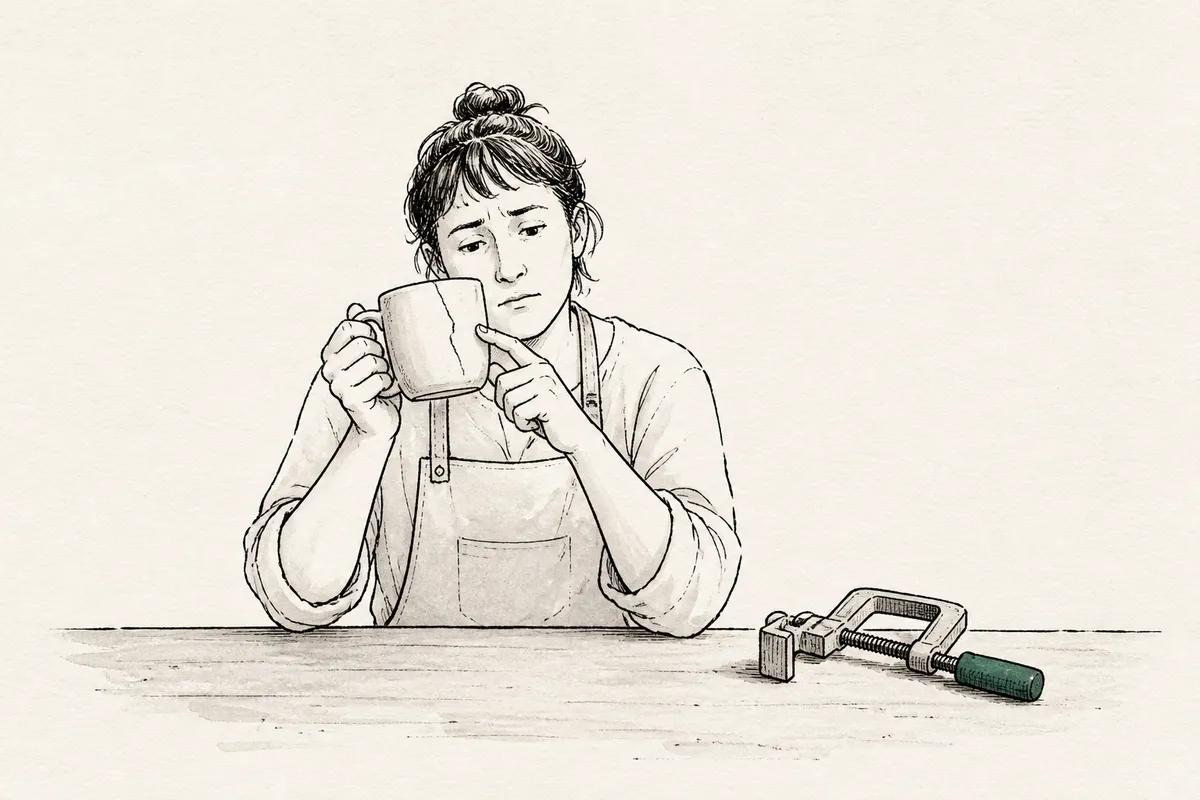
Should You Fix What Broke or Just Hope It Doesn't Repeat?
Something breaks in the middle of a busy season, and the instinct is to patch it just enough to get through the week, then quietly hope the same failure doesn’t show up again next year. That’s the fix vs hope it doesn’t happen again decision, and most owners make it without ever naming it as a decision at all. Here’s the honest version: hoping is not a plan, it’s a delay, and delays have a cost that shows up later disguised as an emergency instead of a line item you chose on purpose.
What does fix vs hope it doesn’t happen again actually mean?
Fix vs hope it doesn’t happen again describes the choice every owner faces after something breaks down, either invest now in correcting the actual point of failure, or leave it as is and rely on the problem staying quiet until the next busy cycle arrives. It’s not a technical term, it’s a decision pattern that shows up in equipment failures, software outages, staffing gaps, and any recurring operational strain that got absorbed once and never actually addressed. The absence of a complaint gets mistaken for the absence of a problem, which is exactly how the same failure sneaks back in twelve months later wearing a different disguise.
Most owners don’t consciously choose to hope, they just run out of bandwidth during the crisis and never circle back once things calm down, and that’s a scheduling failure dressed up as a decision. That’s the trap. The pressure passes, the workaround holds for a while, and the fix quietly falls off the list because nothing is currently on fire.
Why hoping costs more than fixing
Hoping costs more than fixing because the underlying failure point doesn’t disappear when the immediate crisis passes, it just waits for the next period of high demand and then fails again under the same conditions, often at a worse moment. A repeat breakdown during a second busy season usually means lost revenue during the exact window when revenue matters most, plus the same repair cost you deferred, plus whatever new damage accumulated while the weak point sat unaddressed. That’s not a hypothetical or a sales pitch dressed up as math. It’s the same bill, arriving twice, with interest.
Hoping a problem stays quiet is not the same as solving it, and the difference only becomes visible at the worst possible time.
Here’s the real question worth asking after any breakdown: did the fix address the actual point of failure, or did it just get things running again long enough to stop thinking about it. Those are different outcomes, and only one of them holds up under repeated pressure.
The pattern behind repeat breakdowns
A repeat breakdown almost always traces back to a single point of failure that never got isolated the first time, whether that’s an aging piece of equipment, an undocumented process that only one person understands, or a workaround that was never meant to be permanent. Documenting before automating matters here, because you cannot fix what you haven’t clearly identified, and clarifying before scaling means the actual weak point gets named instead of assumed. Skipping that step is what turns a one-time inconvenience into an annual event.
| Approach | What happens next season | What it actually costs |
|---|---|---|
| Fix the specific failure point now | The system holds under the same pressure that broke it before | One upfront cost, addressed on your schedule |
| Hope it doesn’t repeat | The same conditions produce the same failure | Repair cost plus lost revenue plus rushed timing |
| Partial patch, no root cause | Failure shifts to a new point but pressure stays the same | Ongoing patch costs that never resolve the source |
How do you know if a breakdown is worth fixing now versus later?
A breakdown is worth fixing now if it happened under normal operating pressure and is likely to recur under the same seasonal or demand conditions, which means the cost of waiting is measured in lost revenue during your busiest window, not just repair expense. If the failure was a genuine one-off, caused by something unlikely to repeat, the calculation is different and waiting may be reasonable. The distinction is whether the conditions that caused it are still present, and for most seasonal businesses, they are.
- Ask whether the same volume, weather, or demand pattern will return next year.
- Ask whether the workaround used to get through the crisis is still in place.
- Ask whether anyone has actually documented what failed and why.
- Ask what the cost was in lost time or turned-away business during the breakdown itself.
- Ask whether that cost would be smaller than the fix, or larger.
That last question is the one that actually settles it. It’s worth running your own version of this math before deciding to wait another year.
Why “it hasn’t happened again” isn’t proof of anything
“It hasn’t happened again” is not proof the problem is solved, it’s just proof the exact same conditions haven’t recurred yet, and quiet periods get mistaken for stability far more often than they should be. Nobody sees the underlying weak point. They just notice whether operations feel steady or not, and a system that hasn’t failed recently can still be one busy week away from failing again. That’s the entire insight. Staying level when the pressure is real is what actually proves a fix worked, not the absence of pressure.
This is where the quiet cost lives. A deferred fix quietly doesn’t show up as revenue lost on any report, it shows up as a slower season, a missed order, a customer who went elsewhere during the exact week the breakdown recurred. That’s uncomfortable at first, because it means the cost was always there, just unattributed. Yes.
Fun Fact
Preventive maintenance strategies were formalized in industrial engineering decades ago specifically because unplanned downtime during peak production periods was found to cost dramatically more than scheduled repairs during slower periods, a principle that applies just as directly to a small service business as it does to a factory floor.
Field Note
Systems thinking, a framework widely used in operations and engineering, treats a breakdown as evidence of a structural weak point rather than an isolated event, and it draws a clear distinction between fixing a symptom and fixing the point of failure that produced it. Under this framework, a patch that restores function without addressing the underlying cause is considered a temporary state, not a resolution, because the same conditions that caused the first failure remain in place and will eventually produce the same result again. Applying that lens to a seasonal breakdown means the real question is never whether things are running again, it’s whether the specific condition that caused the failure has actually changed. If it hasn’t, the system is still fragile, regardless of how steady it currently feels.
FAQs
How do I know if I have a systems problem or a one-time bad break?
A one-time bad break happens under unusual conditions unlikely to repeat, while a systems problem happens under your normal operating conditions and will recur whenever those conditions return. Look at what was actually happening when the breakdown occurred. If it was standard seasonal volume, standard staffing, or standard equipment use, the conditions will return next year exactly as they were, and so will the failure.
What does it cost to fix something versus wait and see?
The fix itself usually costs a known, fixed amount decided on your own timeline, while waiting risks a repeat cost plus lost revenue during a peak period plus a rushed, more expensive repair under pressure. The fixed cost is uncomfortable because it’s visible and immediate. The deferred cost is often larger but stays invisible until it hits.
Why do businesses keep hoping instead of fixing the real problem?
Businesses keep hoping because the crisis passes, attention moves elsewhere, and nothing is currently demanding a decision, so the fix falls off the list without anyone deciding to abandon it. That’s a scheduling failure more than a judgment failure. The absence of an active complaint gets mistaken for the absence of an active problem.
Is it ever actually fine to just hope a breakdown doesn’t repeat?
Yes, if the conditions that caused the original breakdown were genuinely unusual and unlikely to return, waiting can be a reasonable choice rather than an avoidance. The test is whether the underlying condition, not just the symptom, has actually changed since the failure occurred.
How do you calculate whether a fix is worth it?
Compare the fixed cost of addressing the problem now against the combined cost of a repeat failure, which includes the repair cost again, lost revenue during the disruption, and any rushed premium pricing for emergency service. When that combined cost is run honestly, the fix is almost always the cheaper outcome over a full season cycle.
What is documenting before automating and why does it matter here?
Documenting before automating means writing down exactly what a process or system does, and why, before trying to fix or automate any part of it, so that the actual point of failure gets identified instead of assumed. Skipping this step means fixes often address the wrong point, leaving the real weak spot untouched and likely to fail again.
Does fixing the problem now guarantee it won’t happen again?
No, but addressing the specific point of failure removes the known cause, which is different from hoping an unaddressed cause simply stays quiet. A proper fix changes the conditions that produced the failure, while hoping leaves those conditions fully intact and waiting for the next busy period to test them again.
Next Steps
Running the math on fix versus hope is easier with a clear look at where the actual weak points sit in your operations, not just the ones that made noise last time. See what’s worth fixing first with a Free Website & Workflow Review at https://www.greatlakesbusinesssupport.com/free-website-workflow-review.