How to Run a Four-Day Test Before You Need One
TL;DR: An owner absence test is a planned four-day stretch where you deliberately stay unreachable so you can see, in a low-stakes window, which decisions stall, which calls go unanswered, and which tasks only you know how to do. You pick the days, name one backup, decide in advance what to watch for, and review the results afterward as a list of gaps to close. Testing this before a real absence happens gives you control over the timing instead of facing no warning and no plan.
Key Takeaways
- An owner absence test is a scheduled four-day period where the owner stays unreachable on purpose to find out what breaks.
- The test requires naming exactly one backup with clear authority, not a group of people who might coordinate.
- A short list of specific things to watch, decided before the test starts, turns the result into data instead of a vague impression.
- The concern is a decision or task that quietly routes back to the owner regardless of who is named as backup.
- Reviewing the test afterward means turning every stall into a written fix.
- Keeping the first version simple makes it more likely the test actually happens instead of getting planned into the following month.
What Is an Owner Absence Test?
An owner absence test is a deliberate four-day period during which the owner stays fully unreachable, used to find out which decisions, approvals, or tasks stall without them before a real absence forces the discovery. It is a controlled exercise that requires treating the unavailability as real, because a backup who knows they can text you in a pinch will quietly keep deferring instead of deciding.
The value of a four-day test is that it produces a list, not a disaster. You find out what breaks while customers are still getting served and the business is still running, and you fix it on a Tuesday instead of learning about it during an actual emergency. Testing this before a real absence, whether that’s illness, a family event, or something you can’t predict, means the same gaps come under pressure with room to adjust.
A four-day test turns an unknown risk into a written list of specific gaps.
Choosing the Four Days
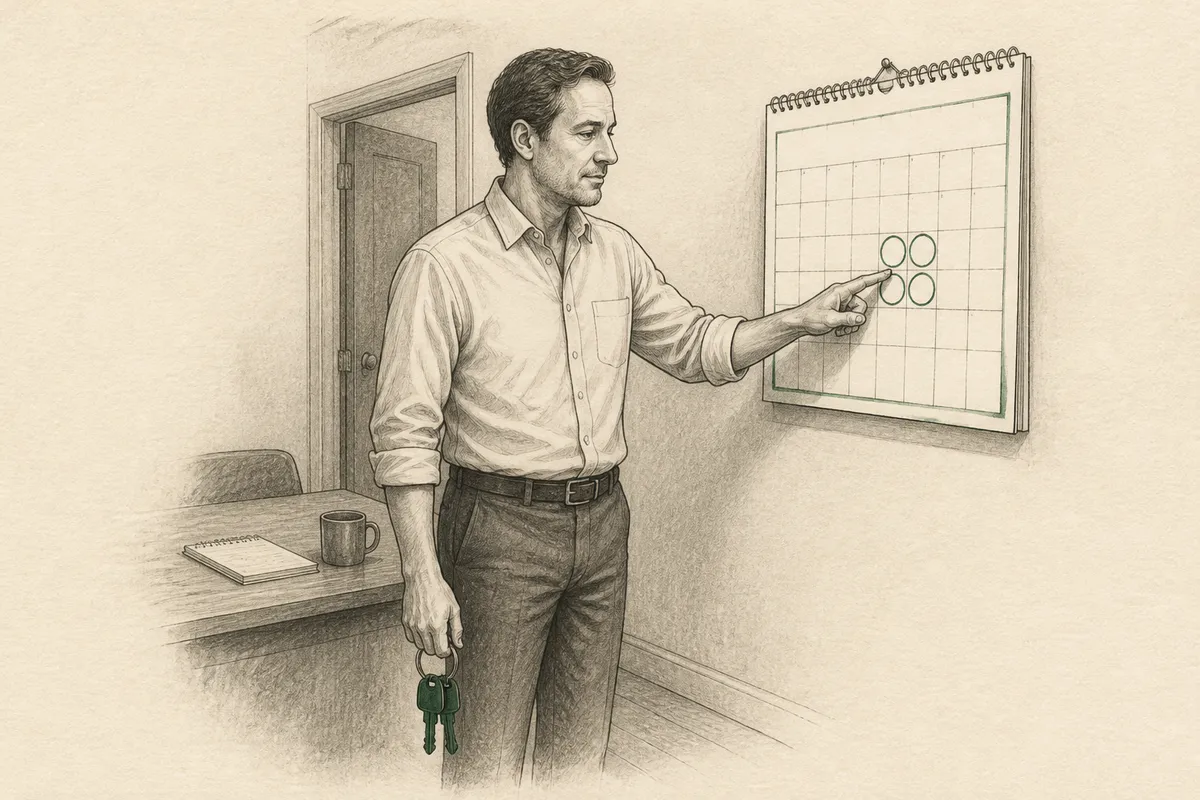
Choose four consecutive days that are ordinary, not a slow week and not a week you’ve already cleared your calendar for. The test is only useful if it reflects normal operating conditions, including the usual volume of calls, the usual number of decisions that land on your desk, and the usual mix of routine and unexpected requests. Picking a quiet week to make the test easier defeats the purpose and gives you false confidence.
A few practical guidelines for choosing the window:
- Avoid the first or last week of a billing cycle, when financial decisions concentrate and distort the result.
- Avoid weeks with a scheduled event you’d normally manage directly, since that pulls your attention back in regardless of intent.
- Include at least one day that historically runs into something unplanned, since that’s where gaps tend to show up.
- Set the dates at least two weeks out, so the backup has time to prepare instead of being told the day before.
Naming the Backup
Name exactly one person as the backup for the test, not a committee and not “whoever’s available.” A single named backup has clear authority to decide, and everyone else in the business knows who to go to, which is the entire point of the exercise. Splitting the role between two or three people during the test hides the real gap, because people default to whoever answers fastest instead of whoever is actually responsible.
FindLaw’s overview of succession planning notes that an emergency succession plan should name who steps in and keeps the business running if the owner is suddenly unavailable, which is the same decision this test is built to rehearse on a small scale. The backup doesn’t need to be a senior manager. The backup needs the authority to make the specific decisions that come up most often, and needs to know in writing what they can approve without checking with you first.
I recommend a short dry run before the four days start. Give the backup three recent decisions that reached you and ask them to say what they would do and where they would look. Any decision they cannot answer goes on the written authority list before the test opens, so the four days measure real gaps instead of missing instructions.
Deciding What to Watch
Before the test starts, write down the specific things you want to track, because without a list you’ll remember only the loudest problem and miss the quiet ones. The concern is a decision that routes back to you by habit, not because the backup lacks the authority to make it. That’s a different problem than a decision the backup genuinely can’t make, and the fix for each is different.
Things worth tracking during the four days:
| What to watch | Why it matters | What a gap looks like |
|---|---|---|
| Who customers or staff try to reach first | Shows whether the backup is actually known and trusted | A customer asks for you by name instead of the backup |
| Decisions the backup defers | Shows where authority is unclear or undocumented | The backup waits instead of deciding, even with no way to reach you |
| Tasks that stall for lack of access | Shows missing logins, missing files, or missing context | A vendor invoice sits because only you can approve it |
| Questions that have no clear answer | Shows gaps in written process, not people | The backup has to guess at a policy that was never written down |
The gap you’re testing for is a decision that quietly routes back to the owner no matter who is named as backup.
Expect at least one mid-week moment where someone tries to reach you directly, because the backup’s authority hasn’t fully registered yet or because the question genuinely needs you. If a vendor calls on day two asking whether to extend payment terms and the backup isn’t sure whether that falls within their authority, that is the exact gap the test exists to surface.
Reviewing the Results
Reviewing the test afterward means sitting down within two or three days, while the details are fresh, and turning every stall or deferred decision into a written rule, a documented access point, or a defined limit on the backup’s authority. Waiting a week to review loses the specifics, and a vague impression that “it mostly went fine” is not useful. The review only works if it’s done close to the event, with the backup present to describe what they ran into in their own words.
Keep the first version simple: a short list of gaps, each with a one-line fix and an owner for that fix, is more useful than an elaborate continuity plan you’ll never finish. The goal is a short list you can act on before the next absence, planned or not.
A list of five fixed gaps is worth more than a plan that was never tested against a real four days.
In Practice: Running a First Absence Test
Situation: An office manager at a small service business has never been unreachable for more than a few hours and wants to find out what breaks before a longer absence becomes necessary.
Steps:
- Select four consecutive business days at least two weeks out, avoiding billing-cycle peaks and any week with a planned event.
- Name one backup in writing and list the specific decisions that backup is authorized to make without checking in.
- Share login access, vendor contacts, and any pending approvals with the backup before the test window opens.
- Turn off direct access for the four days, including checking messages, so the test reflects a real absence.
- Ask the backup to keep a running note of anything they had to guess at or defer.
- Meet with the backup within two or three days after the test ends to review that note together.
- Convert each item on the note into a one-line fix with a named owner and a deadline.
Result: A short written list of specific gaps, each with an assigned fix, exists where there was previously no record of what breaks during an absence. You can tell it worked if the next absence, planned or not, produces a shorter list than the first one did.
Common mistake: Naming two people as co-backups so no single person has clear authority, which produces a vaguer result because each defers to the other. Name one person only, and give that person explicit authority in writing before the test starts.
If it goes wrong: If the test reveals far more gaps than expected, don’t run a second test immediately. Fix the three or four most disruptive gaps first, then retest once those fixes are in place.
This is an illustration of the method, not a record of an actual business.
FAQs
How long should an owner absence test last?
Four days is long enough to surface gaps that a single day off would miss, without creating the operational risk of a longer, untested absence. A single day rarely forces a real decision to surface, since one-day gaps typically get absorbed or delayed without consequence. Four days includes at least one stretch where something unplanned is likely to come up, which is where the test earns its value.
What is a good first owner absence test?
A good first test is short, narrow, and low-stakes: four ordinary business days, one named backup, and a short list of specific things to watch, reviewed within a few days of the test ending. Keep the first version simple rather than building an elaborate continuity plan before you know which gaps actually exist. The detailed plan comes after the first test, built around what it actually revealed.
Why does a business need an owner absence test?
A business needs this test because the alternative is discovering the same gaps during an unplanned absence, when the cost of a stalled decision or a missed customer call is much higher. Testing on a chosen schedule turns an open-ended risk into a specific, fixable list. Waiting for a real emergency to reveal the gaps means paying for the discovery at the worst possible time.
Who should be named as the backup for the test?
The backup should be whoever already handles the most decisions day to day when the owner is briefly unavailable, since that person is closest to the real gaps the test is meant to expose. It doesn’t need to be the most senior person on staff. It needs to be someone who can be given clear, written authority over a specific set of decisions before the test begins.
What should you track during the test?
Track where customers or staff try to reach the owner directly, which decisions the backup defers instead of making, which tasks stall due to missing access, and which questions have no documented answer. These four categories separate problems of trust and visibility from problems of access and from gaps in written process, each of which needs a different fix.
How soon after the test should you review the results?
Review within two or three days of the test ending, while the backup still remembers the specifics of what they ran into. A delayed review produces a general impression instead of a usable list, and the value of the test comes from converting specific stalls into specific written fixes.
Does the owner absence test replace a formal succession plan?
No, the test is a smaller, repeatable exercise that feeds into a formal plan rather than replacing one. FindLaw’s guidance on succession planning describes naming someone to keep the business running during a sudden absence as a core part of that planning, and the four-day test is a practical way to find out whether that person actually has what they need before you formalize the arrangement.
Next Steps
Running this test once gives you a written list of gaps instead of a guess about how your business would hold up without you. Save this for the week before your next few days off, and use it to pick your four days, name your backup, and decide what you’re watching for before the window opens.