Why Owner Knowledge Is the Hardest Thing to Document
TL;DR: A practical way to document owner knowledge is to have someone else interview the owner, ask them to walk through the actual decisions they make, and write it down for them, because the owner usually cannot see their own judgment calls clearly enough to document them alone. Owner knowledge resists documentation because it feels too obvious to write down and it changes depending on the situation, which makes a static document feel wrong the moment it’s finished. A structured interview, done by someone other than the owner, addresses both problems.
Key Takeaways
- Owner knowledge resists documentation because the owner has internalized it so completely that it no longer feels like a decision worth explaining.
- The same task often gets handled differently depending on the customer, the day, or the exception, which makes a single written procedure feel incomplete to the owner who wrote it.
- A second person interviewing the owner surfaces details the owner would never think to include on their own.
- Tacit knowledge, what you know but have never said out loud, has to be pulled out through questions, not produced through memory alone.
- A written procedure should be validated with someone who has never done the task, because that is the only real test of whether it’s usable.
Why Owner Knowledge Resists Documentation
An owner who has run the same operation for years makes dozens of small calls every day without noticing them as calls at all. Which supplier gets the rush order, how to phrase a price increase to a long-term customer, when to waive a late fee and when not to, these are decisions, but they don’t feel like decisions anymore. They feel like just doing the job. The knowledge has become so automatic that the owner no longer experiences it as information worth writing down, which is the core problem with trying to document owner knowledge.
Owner knowledge is the set of judgment calls, exceptions, and unwritten rules a business owner applies automatically, built up through repetition, that never gets written into a manual because the owner no longer notices they’re applying it. This is different from a basic task list. A task list says what to do. Owner knowledge includes when to deviate from the task list, and why.
Two forces work against the owner here. The first is familiarity. Something that took years to learn starts to feel like common sense, and common sense feels unnecessary to explain. The second is variability. The owner doesn’t apply one rule. They apply a rule that shifts based on the customer, the vendor, the season, or the amount of money involved, and no single written sentence captures all of those branches cleanly.
Owner knowledge stops feeling like a decision long before it stops being one.
The Two Reasons This Keeps Failing
Attempts to document owner knowledge fail for one of two reasons, and they compound each other. Recognizing which one is active in a given business changes what fix actually works.
It feels obvious. The owner assumes anyone paying attention would already know the thing they’re doing. Writing it down feels like stating the obvious, so it gets skipped, and the knowledge stays locked in one person’s head until that person is unavailable.
It changes by situation. A rule that holds for a standard order doesn’t hold for a rush order, a long-term client, or a vendor running behind schedule. The owner tries to write one procedure and keeps adding exceptions until the document becomes unreadable or gets abandoned halfway through.
The U.S. Chamber of Commerce notes that a standard operating procedure should capture an existing workflow as it’s actually performed, and says the writer can consult subject matter experts or observe the task being performed to gather the details. The owner is the subject matter expert. The owner is rarely the right person to also be the documentarian.
The person who holds the knowledge is usually the worst person to write it down alone.
The Interview Method
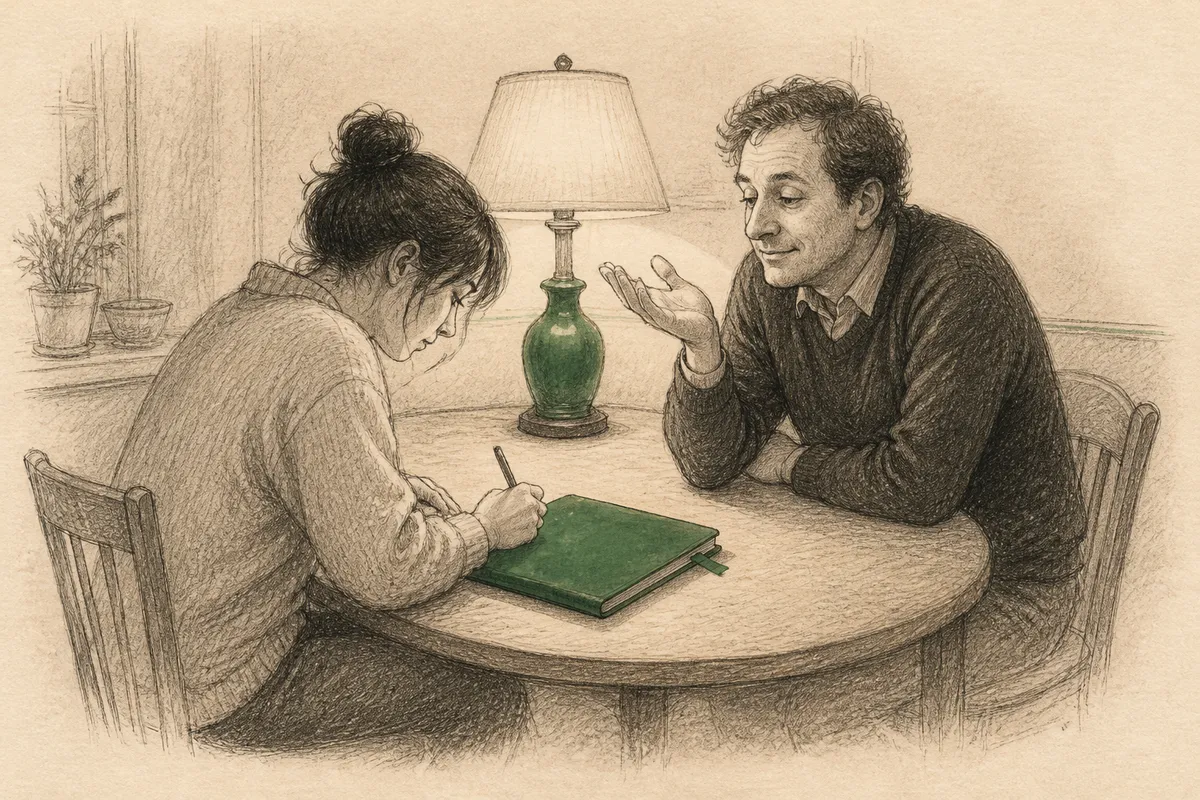
I recommend one interview method: someone else asks the owner direct questions about how a task actually gets done, including the exceptions, and writes down the answers in the owner’s own terms rather than asking the owner to produce a document unprompted. This works because a good interviewer asks the awkward, specific questions an owner would never think to raise on their own, like “what do you do when the customer says no the first time” or “how do you decide which vendor gets the call when two orders land at once.” Someone else asks, you answer, they write it down. That sequence turns buried judgment into a record someone else can follow.
The interview should move through a known structure rather than a free-form conversation:
- Name the task in one sentence, as the owner would describe it to a new hire.
- Walk through the standard version of the task step by step, in the order it actually happens.
- Ask what changes the sequence, and list each exception by name.
- Ask what the owner checks for before finalizing the task, since this is where tacit knowledge usually hides.
- Write the answers into a single document that becomes the source of truth, meaning the one place anyone on the team checks instead of asking the owner directly.
- Read it back to the owner and ask what’s missing, since the first draft rarely captures everything on the first pass.
An owner who tries to write their own procedures edits as they go, smoothing over exceptions because they already know when they apply. An interviewer who doesn’t know the business asks the questions that force those exceptions into the open.
A procedure proves itself when someone who has never done the task can follow it.
Old Way vs. New Way
| Owner writes it alone | Someone interviews the owner | |
|---|---|---|
| Captures tacit knowledge | Rarely, since it feels too obvious to mention | Often, since questions surface what’s assumed |
| Handles exceptions | Often skipped or added as an afterthought | Asked for directly, step by step |
| Time to a usable draft | Often slow or left unfinished | Often faster, because the interviewer drives the structure |
| Readable by a new hire | Depends on the owner’s writing habits | Tested against someone outside the task |
These comparisons are working assumptions that need testing in your operation. The last row matters most: a document only proves itself once someone outside the process tries to follow it.
What to Avoid
Don’t ask the owner to write the procedure and review it themselves as the only check. Self-review misses the same blind spots that made the knowledge hard to document in the first place, since the owner is checking their own writing against their own assumptions. Validate it with someone who has never done the task, and watch where they get stuck. Those stuck points are the gaps the interview missed.
In Practice: Interviewing an Owner for an SOP
Situation: An owner handles order exceptions personally and has never written down how those decisions get made, while an office manager needs a reference for when the owner is unavailable.
Steps:
- Schedule a 45 to 60 minute (example) session between the owner and someone who does not perform the task regularly.
- Ask the owner to describe the standard version of the task from start to finish, in order.
- Ask what situations change that order, and list each one by name as it comes up.
- Ask what the owner checks before calling the task done, since this is where unspoken judgment usually surfaces.
- Draft the answers into a single written document, organized by step and exception.
- Read the draft back to the owner and note any corrections or missing steps.
- Hand the draft to someone who has never done the task and ask them to follow it exactly.
Result: A written procedure exists that names the standard steps and the known exceptions, and the office manager can follow it without calling the owner first. Success looks like the test reader completing the task correctly using only the document.
Common mistake: Treating the first draft as final. The fix is a second pass after a real test run, since gaps rarely show up until someone outside the process tries to use it.
If it goes wrong: If the test reader gets stuck or produces a different outcome than the owner expects, that gap points to an exception the interview missed, not a failure of the test reader.
This is an illustration of the method, not a documented client result.
FAQs
How do I document owner knowledge that feels too obvious to write down?
You document it by having someone else interview the owner and ask direct questions about each step and exception, rather than asking the owner to write the procedure from memory. The obviousness is the problem itself, since the owner has stopped noticing their own judgment calls, and a trained interviewer’s questions pull that judgment back into view.
What is tacit knowledge in a small business?
Tacit knowledge is the know-how an owner or long-term employee applies automatically, built from repetition, that they’ve never had to say out loud because they’ve never needed to explain it to anyone. It includes things like which customers need extra reassurance, which vendor delays are worth escalating, and which shortcuts are safe to take. None of it lives in a manual until someone asks about it directly.
Why can’t the owner just write their own standard operating procedures?
Owners struggle to write their own procedures because familiarity edits out the details that feel obvious to them but aren’t obvious to anyone else, and because they tend to describe the standard case while skipping the exceptions they handle without thinking. The result is a document that reads clean but leaves out the judgment calls a new hire would actually need.
How long does it take to document a process through an interview?
There’s no fixed timeframe that applies to every situation, since it depends on how many exceptions the task involves and how many sessions it takes to surface them. A single task with a few known exceptions might take one structured session (example), while a role with many judgment calls could take several.
Who should interview the owner to capture this knowledge?
The interviewer should be someone who does not currently perform the task, since familiarity with the task makes it harder to notice which details are missing. This can be an employee from another part of the business, an outside consultant, or anyone positioned to ask plain questions without assuming they already know the answer.
How do I know if a written procedure actually works?
A procedure works if someone who has never done the task can follow it and produce the correct result without asking the owner for help. That test matters more than the owner’s own read of the document, because the owner will fill gaps automatically without noticing they did it.
What’s the risk of not documenting owner knowledge at all?
The risk is that the business stays dependent on one person for every exception and judgment call, which creates delays, inconsistent answers to customers, and a hard ceiling on how much the owner can step back from daily operations. Untested assumptions about what staff already know tend to surface at the worst possible moment, usually when the owner is unavailable to answer the question directly.
Next Steps
Documenting owner knowledge alone rarely captures the exceptions that matter most, since the person holding the knowledge is also the person least able to see what’s missing from it. See how a Systems Review captures this through a structured interview: https://qualify.greatlakesbusinesssupport.com/systems-review